Place publique (PP)
Bloc: PS – Place publique.
колонка NFP (подколонка PS); Place publique — редакторское объединение с PS (в таблице отдельной колонки нет)
Profile
Experimental · automatically generated (local model) from Wikipedia and the press — may contain errors.
Place publique is a French centre-left, pro-European political party originating from civil society, founded in 2018 by Raphaël Glucksmann and other figures. The movement structured itself around alliances with the Socialist Party, securing seats in the 2019 and 2024 European elections, as well as a seat in the National Assembly in 2024 within the framework of the New Popular Front.
Strengths
- The party succeeded in obtaining significant parliamentary representation by winning three seats in the 2024 European elections thanks to a joint list with the Socialist Party. Wikipédia
- Place publique joined the New Popular Front during the 2024 legislative elections, enabling its member Aurélien Rousseau to be elected as a deputy. Wikipédia
Weaknesses
- The alliance with the Socialist Party for the 2019 European elections triggered a wave of internal defections within the party. Wikipédia
- According to L'Opinion, the composition of Raphaël Glucksmann's presidential campaign team involves a complex balancing act between Place publique loyalists and the various sensibilities within the Socialist Party. L'Opinion Centre-right · 28 Oct 2026
Text from Wikipedia (CC BY-SA 4.0)
Figures
| Raphaël Glucksmann | 2018 |
|---|
Bloc candidates
Candidates of the “PS – Place publique” bloc (all parties), current score and change over about 7 days from the model history.
| Candidate | Party | 1st-round score | 7-day change |
|---|---|---|---|
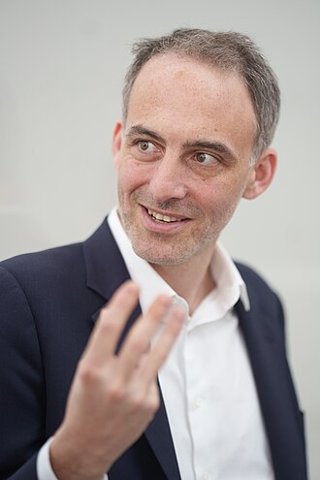 Raphaël Glucksmann |
PP | 13.2% | 0 pts |
How to read this table. One row per candidate of the bloc: current score and change over about a week. The change comes from the model's daily history, not from a single poll.
Learn more
A dash means the history does not reach back far enough. Days reconstructed after the fact are part of this history.
Press coverage of the party's figures
Raphaël Glucksmann
- « Vous aurez du mal à trouver ici quelqu’un ayant une mauvaise opinion de lui » : à Bruxelles, l’eurodéputé Glucksmann a marqué des points Le Parisien · 31 Oct 2026 · positive
- Présidentielle 2027 : Edouard Philippe, Raphaël Glucksmann et la quête fébrile de l'électorat modéré - Les Echos Les Echos · 31 Oct 2026 · negative
- « Pas un choix de facilité » : qui est Alexandre Ouizille, sénateur PS et directeur de campagne de Raphaël Glucksmann ? Le Parisien · 31 Oct 2026 · neutral
- Raphaël Glucksmann s'efforce de rassembler un Parti socialiste encore hésitant - upday News upday News · 31 Oct 2026 · neutral
- Régularisation de 300 000 clandestins : le PS de Glucksmann veut importer le modèle Sánchez - Breizh-info.com Breizh-info.com · 31 Oct 2026 · neutral
- Présidentielle 2027 : deux macronistes historiques appellent à une coalition « de Raphaël Glucksmann à Xavier Bertrand - Frontières Frontières · 31 Oct 2026 · neutral
- « Contrairement à mon lapsus… » : le porte-parole de Raphaël Glucksmann fait son mea-culpa après s’être emmêlé les pinceaux sur BFMTV Le Parisien · 31 Oct 2026 · negative
- Glucksmann, face au lourd défi de rassembler le PS derrière lui - blue News blue News · 31 Oct 2026 · negative